
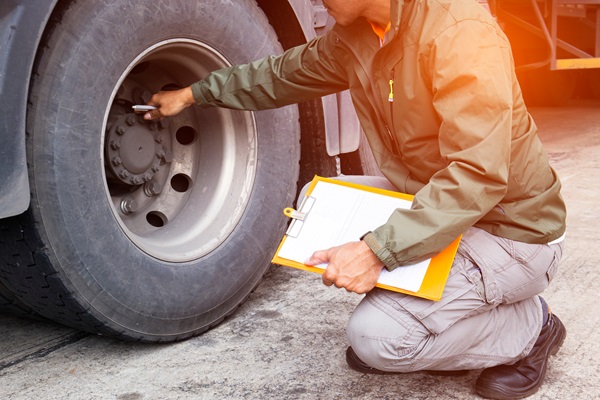
Brake system failures accounted for more than 41 percent of vehicle out-of-service violations during the 2025 Roadcheck
When the Commercial Vehicle Safety Alliance (CVSA) rolled out its 2025 International Roadcheck, a lot of trucks rolled through just fine, and a surprising number rolled to a stop. For Arkansas motor carriers and truck drivers, these results are more than just statistics; they're a real-time report card on the issues that most often lead to tickets, out-of-service orders, and serious truck accidents.
Over a three-day period (May 13–15), enforcement officers in the United States, Canada, and Mexico conducted 56,178 commercial vehicle and driver inspections as part of the International Roadcheck initiative. The good news is that 81.6% of vehicles and 94.1% of drivers inspected did not receive any out-of-service violations, showing that most operators are doing things the right way.
But when inspectors did find problems, they were serious. Officers issued 13,553 vehicle out-of-service violations and 3,317 driver out-of-service violations. They took 10,148 commercial motor vehicles and 3,342 drivers off the road until those issues were fixed. That translates to an overall vehicle out-of-service rate of 18.1% and a driver out-of-service rate of 5.9%. This means roughly one in five vehicles inspected had a safety defect serious enough to sideline them.
Why do brakes, tires, and hours of service matter so much?
In 2025, brake system failures were the most common reason vehicles were placed out of service across North America. When braking systems fail, vehicles need much more distance to stop. That sharply raises the risk of rear-end and runaway crashes, particularly on Arkansas’s hilly roads and during wet driving conditions. The numbers show just how widespread and dangerous these issues were:
- 3,304 brake system violations were cited during inspections
- 2,257 vehicles were found with at least 20% of their brakes defective
- 5,561 total brake-related out-of-service violations were recorded
- More than 41% of all vehicle out-of-service issues involved braking problems
Tires were another major concern. Inspectors documented 2,899 tire-related out-of-service violations, which accounted for 21.4% of all vehicle out-of-service violations. That includes flat or underinflated tires, inadequate tread depth, visible cord, and tires not properly rated for the load. A blowout on I‑40 or I‑30 doesn't just affect the driver of the truck; it can send debris flying into other lanes and trigger multi-vehicle collisions.
On the driver side, hours-of-service violations were the number one out-of-service category, representing 32.4% of all driver out-of-service violations in the U.S. and Canada. Inspectors also cited drivers for operating without a valid commercial driver’s license, lacking a required medical card, using false logs, or driving with a suspended CDL. These are not minor paperwork errors; they are exactly the kinds of issues that often surface after a serious crash and can play a major role in determining fault and liability.
What do these results mean for Arkansas crashes and liability?
For Arkansas carriers and truckers, the 2025 Roadcheck results highlight the same issues that repeatedly surface in serious crash investigations: brake issues, tire issues, and hours-of-service violations. When a truck is placed out of service for these defects during a roadside inspection, it is a clear signal that the vehicle shouldn't have been on the road in the first place, and the same logic applies when similar defects are discovered after a collision.
From a legal standpoint, these violations can support claims that a carrier failed to properly inspect, maintain, or supervise its vehicles and drivers. Evidence of out-of-service–level problems (e.g., worn-out brakes, underinflated tires, or falsified logs) often becomes central in proving negligence or even a pattern of unsafe practices.
The fact that CVSA continues to find thousands of these violations across North America each year demonstrates why prompt investigation, preservation of inspection records, and careful review of maintenance and logbook data are so important after a truck wreck in Arkansas.
What are the dangers of bad brakes, bad tires, and bad hours-of-service practices?
Unsafe equipment and poor compliance practices create serious risks on the road, especially when large commercial vehicles are involved. Bad brakes, worn tires, and hours-of-service violations each increase the likelihood of severe crashes on their own. When they happen together, the danger multiplies:
- Bad brakes: Faulty or poorly maintained brakes increase stopping distance and reduce a driver’s ability to respond to sudden traffic changes. This raises the risk of rear-end crashes, jackknifes, and runaway vehicles on hills. Brake failures are especially dangerous in wet conditions where traction is already limited.
- Bad tires: Worn tread, underinflation, or tire defects make vehicles harder to control. Blowouts can cause sudden loss of steering control, while poor tread reduces grip in the rain. Tire failures often lead to rollovers or multi-vehicle crashes, particularly at highway speeds.
- Hours-of-service violations: When drivers exceed legal driving limits, fatigue sets in. Tired drivers have slower reaction times, impaired judgment, and a higher chance of falling asleep at the wheel. Fatigue-related crashes tend to be high-impact and catastrophic because the driver may not brake or swerve in time.
Talk to an Arkansas truck accident lawyer who knows how to fight back
After a tractor-trailer accident, you are suddenly dealing with pain, uncertainty, and pressure from insurance companies that want to protect their bottom line. McDaniel Law Firm, PLC steps in to level the playing field. Our attorneys understand trucking regulations, know how to uncover violations, and act quickly to preserve evidence before it disappears. From investigating the crash to working with experts and handling insurance companies, we take the legal burden off your shoulders so you can focus on healing.
We offer free consultations, so you can get answers without worrying about upfront costs. You also pay nothing unless we recover compensation for you. Our firm works on a contingency fee basis, which means our fee comes out of the recovery, not your pocket. That allows you to focus on your recovery, even during a stressful and uncertain time.
Contact us to discuss what happened and learn how we can help protect your rights. We proudly serve clients throughout Jonesboro, Paragould, Northeast Arkansas, Northwest Arkansas, all of Arkansas, Southeast Missouri, and Memphis, Tennessee. One conversation can make a meaningful difference in what happens next.
"Brett and the entire team were super professional. They explained my rights and my options. I would definitely recommend them and will be using them again if I ever run into any issues in the future." – C.D., ⭐⭐⭐⭐⭐