
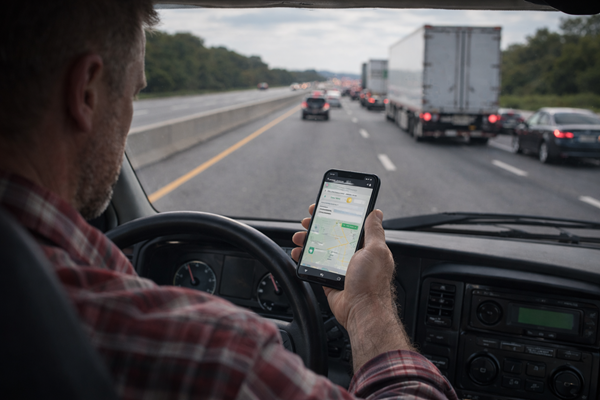
The Impact of High-Speed Distraction in Arkansas
One careless glance inside a commercial truck cab can change a life in an instant. What starts as a driver checking a dispatch message or adjusting a GPS can end like a runaway train. When an 80,000-pound tractor-trailer crosses lanes on I-55 or Highway 67, the resulting force of impact often leaves victims with catastrophic injuries.
At McDaniel Law Firm, PLC, our attorneys have seen how distraction becomes the central issue in North Arkansas truck accident cases. Once inattention is proven, the entire story of the crash—the lack of braking, the failure to swerve, and the violent impact—starts to make sense.
Arkansas Enforcement: AI and Handheld Detection
Starting in mid-January 2026, the Arkansas Department of Transportation (ARDOT) began deploying advanced camera systems designed specifically to detect handheld device use in work zones. This technology allows the Arkansas Highway Patrol to identify distracted drivers in real-time.
New Technology for Roadside Accountability
These detection cameras are part of a broader statewide push to reduce preventable fatalities. For victims of truck accidents, this technology provides a new layer of evidence. If a commercial driver was flagged by a work-zone camera just moments before a collision, that digital record becomes a cornerstone of your legal claim.
Arkansas Statewide Enforcement Campaigns
In addition to new camera technology, Arkansas law enforcement continues to participate in the Put the Phone Away or Pay campaign. During high-intensity enforcement windows in April, officers focus specifically on commercial drivers who violate federal and state hands-free mandates.
“Distracted driving, mainly cell phone use, remains a major contributor to serious and fatal crashes,” said Arkansas Public Safety Secretary Colonel Mike Hagar. “It is dangerous and illegal, and puts everyone on the road at risk. Our officers will increase enforcement and stop and ticket anyone who is texting and driving. If you drive distracted, you will face the consequences.”
How We Prove a Truck Driver Was Distracted
Proving distraction requires more than just an assumption; it requires a deep dive into the digital and physical evidence left by commercial vehicles. Rarely does one piece of evidence carry a case. Instead, we build our claims brick by brick.
Subpoenaing Electronic Logging Device (ELD) Data
Most modern trucks are equipped with ELDs that track more than just hours of service. This data can show exactly when a driver was moving, when they stopped, and the precise timing of their route. When compared with cell phone records, we can see if a driver was interacting with a device at the moment of impact.
Securing In-Cab and Outward-Facing Video
Many trucking fleets now utilize dash cameras. Inward-facing cameras are often the most persuasive evidence available, as they can show a driver looking down at their lap, eating, or even using a handheld phone. We move quickly to secure this footage before the trucking company’s data retention policy allows it to be overwritten.
Black Box Data and Crash Reconstruction
A truck’s Event Data Recorder (the black box) reveals technical details like speed, throttle position, and braking patterns. If the data shows the truck hit a vehicle at full speed without any attempt to brake, it strongly indicates that the driver never saw the hazard because their attention was elsewhere.
How Federal Trucking Rules Can Strengthen a Claim
Commercial trucking is heavily regulated, and those rules can play a major role in distracted driving cases. Federal regulations prohibit commercial drivers from texting while driving and sharply restrict handheld mobile phone use. Those rules aren't just safety suggestions. They help define what constitutes reasonable conduct for a professional truck driver.
When a driver violates a safety rule, that violation can support the argument that the driver breached a legal duty of care. When the trucking company tolerated bad habits, failed to train the driver, ignored prior safety warnings, or allowed unsafe in-cab practices, the case may expand far beyond the conduct of the individual behind the wheel.
Can The Trucking Company Also Be Liable?
Many people assume a distracted driving truck case is only about the driver, but that isn't how these claims usually work. Trucking companies may be responsible under vicarious liability principles when their employee causes a crash during the course of work. They may also face direct liability if their own decisions contributed to the wreck.
Common company-related issues include poor hiring, weak supervision, lack of training, unsafe communication practices, and failure to monitor onboard safety data. If a carrier knew a driver had prior distracted driving citations or repeated signs of inattention and still kept that driver on the road, the legal exposure may grow significantly.
Some of the most important questions in these cases include:
- Did The Company Train Drivers On Mobile Device Restrictions?
A missing or weak policy can suggest the company didn't take distraction risks seriously. - Did Dispatch Practices Encourage Unsafe Responses?
Repeated calls or message demands while the truck was moving can show that the company created the distraction itself. - Did The Fleet Use Cameras Or Telematics?
If so, the company may have had prior notice of dangerous habits and failed to correct them. - Did The Company Preserve Key Evidence?
Missing footage, deleted records, or overwritten data may raise serious spoliation issues.
Fighting for Arkansas Families for Over 50 Years
In a serious truck accident case, proving distraction is about more than assigning blame. It's about securing the compensation needed for medical bills, lost income, and lifelong care. McDaniel Law Firm, PLC has spent over half a century fighting for injury victims in Jonesboro and throughout Northeast Arkansas.
We don't treat you like a number. We investigate the crash, secure the digital evidence, and push back against trucking companies that try to hide the truth. If you or someone you love has been hurt, contact us today for a free, no-obligation consultation.
"Brett and the entire team were super professional. They explained my rights and my options. I would definitely recommend them and will be using them again if I ever run into any issues in the future." – C.D., ⭐⭐⭐⭐⭐